Rio Arriba County Applications for Permits to Drill (APDs) case before the Oil Conservation Commission has been postponted to October 7, 2009 (See Common Ground United action alert>>>>).
Tuesday, September 8, 2009

Monday, September 7, 2009
EnCana answers critics about Wyoming gas field groundwater study
Meanwhile, locals want the state to study frac'ing effects in Garfield County
"A natural gas company has hit back at its critics, at least indirectly, regarding possible groundwater contamination in a gas field in central Wyoming.
EnCana Oil & Gas (USA) sent out a letter on Aug. 28, addressed to the residents of Pavillion, Wyo., emphasizing that the Environmental Protection Agency has not reached any conclusions yet about the groundwater contamination question, and urging the residents to keep an open mind on the subject.
Meanwhile, a Garfield County group is planning to urge local officials to call for a state study of the potential effects of drilling on the residents of Battlement Mesa, where a gas company is planning to drill up to 200 wells." More>>>>
Related articles:
Monday, September 7, 2009
Wyo. community blames fracking for water woes
Thursday, September 3, 2009
Fracking and the Environment: Natural Gas Drilling, Hydraulic Fracturing and Water Contamination
Wyo. community blames fracking for water woes
September 7, 2009
"PAVILLION, Wyo. — A glass of water drawn from John Fenton's underground well outside his rural log home built against a rocky ridge looks and tastes as clear and refreshing as any bottled water.
But Fenton's water contains traces of arsenic, barium, cobalt, copper and other compounds identified in water tests that cannot be seen, smelled or tasted.
"It definitely makes you think every time you turn the faucet on," said Fenton, who farms hay on about 200 acres outside his home, located about 130 miles west of Casper.
He and other residents outside this small rural, farming community blame their water woes — and what they perceive to be the unusual health problems in their midst — on hydraulic fracturing, or "fracking," a common technique used in drilling new oil and gas wells.
Those kind of complaints have surfaced across the county in areas where energy producers use fracking. But the industry says the practice is safe, and the federal government has exempted the process from its oversight.
Fracking involves injecting water, sand and chemicals under high pressure into the ground to force open channels in deep tight sand and rock formations so that oil and gas can be more easily recovered. Fracking has been used for decades, but improvements in the process and new drilling techniques have led to its use in unlocking heretofore large, unrecoverable natural gas reserves.
Some states are investigating complaints associated with fracking, but this community in central Wyoming is the only place where the Environmental Protection Agency has opened its own investigation, according to agency officials. Here, Fenton and his neighbors formed their own advocacy group, Pavillion Area Concerned Citizens, and pleaded with the EPA and state environmental officials to test their water wells" More>>>>
Related Story:
Fracking and the Environment: Natural Gas Drilling, Hydraulic Fracturing and Water Contamination
Thursday, September 3, 2009
Fracking and the Environment: Natural Gas Drilling, Hydraulic Fracturing and Water Contamination
Democracy Now! report featuring video from Santa Fe County and Galisteo Basin resident, Debra Anderson, her documentary, "Split Estate":
"Gas drilling companies such as Halliburton say the gas drilling technique known as hydraulic fracturing, or “fracking,” is safe, but opponents contend it pollutes groundwater with dangerous substances. Now, new evidence has emerged possibly linking natural gas drilling to groundwater contamination. ProPublica journalist Abrahm Lustgarten reports federal officials in Wyoming have found that at least three water wells contain chemicals used in hydraulic fracturing. [includes rush transcript]
"Gas drilling companies such as Halliburton say the gas drilling technique known as hydraulic fracturing, or “fracking,” is safe, but opponents contend it pollutes groundwater with dangerous substances. Now, new evidence has emerged possibly linking natural gas drilling to groundwater contamination. ProPublica journalist Abrahm Lustgarten reports federal officials in Wyoming have found that at least three water wells contain chemicals used in hydraulic fracturing. [includes rush transcript]
Guest:
Abrahm Lustgarten, reporter for investigative news website ProPublica. He has been covering this issue very closely for the past year and has broken a number of stories." Link>>>>
Wednesday, September 2, 2009
ExxonMobil! Free Mrs. Burns!

An issue swarming the blogosphere is about the oil and gas industry allegedly seeking to suppress freedom of speech by an afflicted landowner incurring significant adverse impacts from oil and gas extraction activities on her south Texas ranch. See posts at Splash Down! , Blue Daze , Los Malulos website and blog . There seems to be a movement afoot...
Friday, August 28, 2009
Approach Operating, LLC applications to drill the Tierra Amarilla / Rio Chama

Approach Operating, LLC has submitted 24 applications to drill (APDs) in the fragile ecosystem of Tierra Amarilla in the Rio Chama to Rio Arriba County and the New Mexico Oil Conservation Division (OCD). According to OCD, “The Board of County Commissioners of Rio Arriba requests a hearing to show that the drilling of the following (four) wells by Approach Operating, LLC will cause waste, violate correlative rights and/or be injurious to human health and the environment.”
See Common Ground United Action Alert>>>>
See Common Ground United Action Alert>>>>
~~~~~
Thursday, August 27, 2009
Not-in-My-Neighbor’s-Backyard:
Briefs: Aug. 26
By: Dave Maass 08/26/2009
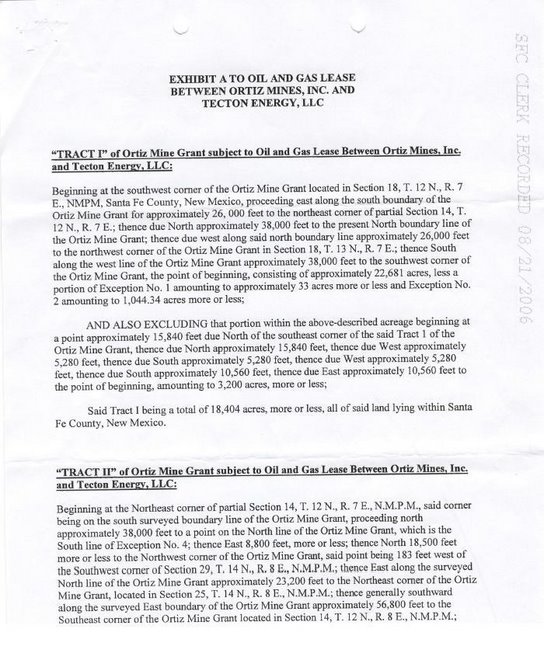
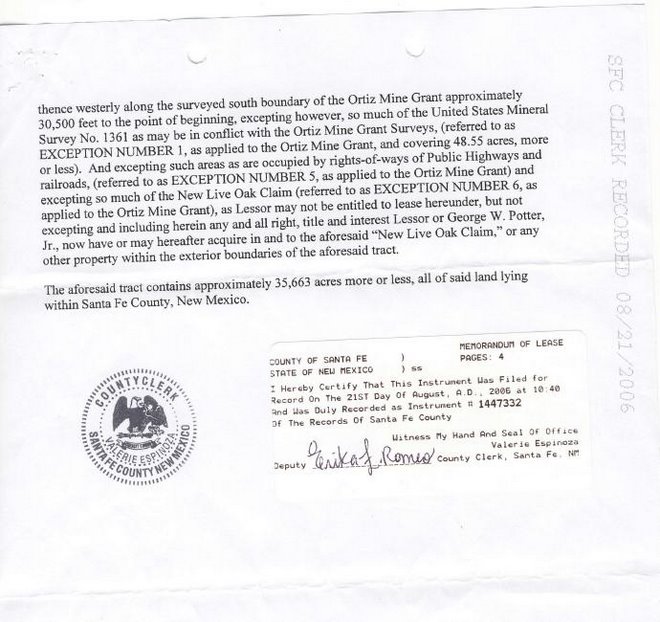
"Environmentalists in Santa Fe County may have chased would-be oil wildcats Tecton Energy out of the Galisteo Basin, but folks in Rio Arriba County are still facing off with Approach Operating LLC.
The New Mexico Oil Conservation Commission will hold hearings on 20 applications from Approach to drill the Mancos shale formations six miles outside of Tierra Amarilla.
The commission also will consider Rio Arriba County Commission’s request to cancel or suspend four of Approach’s previously approved drilling permits. The hearings are scheduled for 9 am, Sept. 9 at Porter Hall, 1220 S. St. Francis Drive in Santa Fe. " Link>>>>
Oil Conservation Commission Docket Link>>>>
Wednesday, August 26, 2009
EPA: Chemicals Found in Wyo. Drinking Water Might Be From Fracking

"Louis Meeks’ well water contains methane gas, hydrocarbons, lead and copper, according to the EPA’s test results. When he drilled a new water well, it also showed contaminants. The drilling company Encana is supplying Meeks with drinking water. (Abrahm Lustgarten/ProPublica)"
by Abrahm Lustgarten, ProPublica - August 25, 2009 12:36 pm EDT
"Federal environment officials investigating drinking water contamination [1] near the ranching town of Pavillion, Wyo., have found that at least three water wells contain a chemical used in the natural gas drilling process of hydraulic fracturing. Scientists also found traces of other contaminants, including oil, gas or metals, in 11 of 39 wells tested there since March.
The study, which is being conducted under the Environmental Protection Agency’s Superfund program, is the first time the EPA has undertaken its own water analysis in response to complaints of contamination in drilling areas, and it could be pivotal in the national debate [2]
by Abrahm Lustgarten, ProPublica - August 25, 2009 12:36 pm EDT
"Federal environment officials investigating drinking water contamination [1] near the ranching town of Pavillion, Wyo., have found that at least three water wells contain a chemical used in the natural gas drilling process of hydraulic fracturing. Scientists also found traces of other contaminants, including oil, gas or metals, in 11 of 39 wells tested there since March.
The study, which is being conducted under the Environmental Protection Agency’s Superfund program, is the first time the EPA has undertaken its own water analysis in response to complaints of contamination in drilling areas, and it could be pivotal in the national debate [2]
over the role of natural gas in America’s energy policy.
Abundant gas reserves are being aggressively developed in 31 states, including New York [3] and Pennsylvania [4]. Congress is mulling a bill [5] that aims to protect those water resources from hydraulic fracturing, the process in which fluids and sand are injected under high pressure to break up rock and release gas. But the industry says environmental regulation is unnecessary [6] because it is impossible for fracturing fluids to reach underground water supplies and no such case has ever been proven.
Scientists in Wyoming will continue testing this fall to determine the level of chemicals in the water and exactly where they came from. If they find that the contamination did result from drilling, the placid plains arching up to the Wind River Range would become the first site where fracturing fluids have been scientifically linked to groundwater contamination." More>>>>

Tanks hold natural gas condensate and mark the spot of producing gas wells in the Pavillion field, in Fremont County, Wyo., in the heart of the Wind River Indian Reservation. The Environmental Protection Agency has found chemicals that are used in gas drilling in water wells near this site. (Abrahm Lustgarten/ProPublica)
References:
[6] http://www.propublica.org/feature/industry-defends-federal-loophole-for-drilling-before-hearing-605
� Copyright 2009 Pro Publica Inc.
Sunday, August 23, 2009
“Astroturf Activism”: Leaked Memo Reveals Oil Industry Effort to Stage Rallies Against Climate Legislation

"A leaked memo reveals the American Petroleum Institute is asking oil companies to recruit employees, retirees and contractors to take part in rallies against climate change legislation. We speak with Greenpeace USA research director Kert Davies. [includes rush transcript]" Link to video>>>> Link to memo>>>> Link to related post>>>>
Saturday, August 22, 2009
Double Post: Oil Industry Backs Protests of Emissions Bill / In hot water: World sets ocean temperature record


Associated Press
In hot water: World sets ocean temperature record
"WASHINGTON — Steve Kramer spent an hour and a half swimming in the ocean Sunday — in Maine. The water temperature was 72 degrees — more like Ocean City, Md., this time of year. And Ocean City's water temp hit 88 degrees this week, toasty even by Miami Beach standards.
Kramer, 26, who lives in the seaside town of Scarborough, said it was the first time he's ever swam so long in Maine's coastal waters. "Usually, you're in five minutes and you're out," he said.
It's not just the ocean off the Northeast coast that is super-warm this summer. July was the hottest the world's oceans have been in almost 130 years of record-keeping.
The average water temperature worldwide was 62.6 degrees, according to the National Climatic Data Center, the branch of the U.S. government that keeps world weather records. That was 1.1 degree higher than the 20th century average, and beat the previous high set in 1998 by a couple hundredths of a degree. The coolest recorded ocean temperature was 59.3 degrees in December 1909.
Meteorologists said there's a combination of forces at work this year: A natural El Nino system just getting started on top of worsening man-made global warming, and a dash of random weather variations. The resulting ocean heat is already harming threatened coral reefs. It could also hasten the melting of Arctic sea ice and help hurricanes strengthen." More>>>>
Monday, August 17, 2009
Legislators push case for third-party power producers
PNM says contracts with such developers illegal under state law
8/16/2009 - 8/12/09
"A bipartisan group of legislators has filed a brief with state regulators on an issue that will affect who provides renewable energy in New Mexico.
The state legislators support allowing third parties — entities besides Public Service Company of New Mexico — to own and operate solar plants and other renewable energy systems under contract with the utility's customers.
PNM, the state's largest utility, contends such third-party arrangements within its exclusive service area are illegal.
It is the first time in recent memory, and perhaps the first time ever, that legislators have filed a brief with the state Public Regulation Commission in their official capacities as elected lawmakers. "It is unusual," PRC member Jason Marks said.
Rep. Brian Egolf Jr., D-Santa Fe, said 26 legislators so far have signed on to the brief he wrote, from House Speaker Ben Luján, D-Nambé, to the other side of the political spectrum, Sen. Clinton Harden, R-Clovis. "Renewable energy is important enough that legislators were willing to put their names on this," Egolf said.
Gov. Bill Richardson also supports third-party agreements for renewable energy." More>>>>
Sunday, August 16, 2009
You gotta dream big when you dream about oil shale
Here's an article for the "drill, baby, drill!" crowd:
~~~
You gotta dream big when you dream about oil shale

"Things have quieted in the oil patch, and you don't hear as many chants of "Drill, baby, drill" as we did last summer. Even so, there remains considerable interest in developing oil shale, as evidenced by a recent report from the Center of the American West in Boulder.
America's biggest deposits are roughly centered where Colorado, Wyoming and Utah come together. Producing useful oil from those rocks means converting an unpopulated area into an industrial zone of roads, retorts, power lines and refineries. No one who cherishes open space and clean air wants to see that. But there may be a way to minimize those effects if that oil shale ever gets developed. This is my solution: Mine it here, but process it somewhere else.
It's the processing, after all, that requires one to three barrels of water for every barrel of oil, and if there's one thing we don't have a lot of here, it's water.
Technically, oil shale is neither oil nor shale. The "shale" is a sedimentary rock known as marlstone, and the "oil" is a waxy solid called kerogen. A ton of marlstone contains 20 to 50 gallons of kerogen. To extract the kerogen, you crush and heat the marlstone. The leftover marlstone takes up about 30 percent more volume. So you can't just fill in the hole you mined because you'll have a big pile of leftovers. As for the kerogen, it has to be refined to make useful products like diesel fuel.
So here's a pipe dream for producing oil shale: We start with open-pit mines, with the drills and gargantuan shovels operated by electricity. Mine haulage will be by rail, like the Bingham Canyon pit in Utah, and the carloads of marlstone will also moved to some place that has plenty of water, already has a petrochemical industry, and could even use the waste rock that remains after the kerogen is extracted. In other words, Louisiana. There's abundant water at the mouth of the Mississippi, and it rains 60 inches a year, as opposed to maybe 12 up here.
As for the waste rock, Hurricane Katrina underlined the fact that much of New Orleans is below sea level. This is clearly a place that could use fill -- crushed marlstone by the cubic mile." More>>>>
Saturday, August 15, 2009
New Mexico solar law recognized
8/14/2009 - 8/15/09
New Mexico is one of only five states that have exemplary laws guaranteeing solar access, according to a new report published by the Solar America Board for Codes and Standards.
The report looked at two areas: solar easements, or the ability of one property to receive sunlight across property lines without obstruction from another's trees or buildings; and solar rights, or the ability to install solar energy systems on property that is subject to private covenants and restrictions.
In New Mexico, a property owner can record ownership of a solar energy system and establish a solar easement by filing a declaration with the county clerk's office. The law also allows a property owner to enforce a solar right in court." More>>>>
Monday, August 10, 2009
Colo. landowners wary of effort to resume drilling
Denver Post
Posted: 08/09/2009 09:38:20 AM MDT
Posted: 08/09/2009 09:38:20 AM MDT
Updated: 08/09/2009 11:05:21 AM MDT
"DENVER—Melanie Bounds remembers talking to her husband outside on their deck when an explosion blew the roof off the building housing their water well. She could see her husband's mouth moving, but couldn't hear what he was saying.
"It was deafening," Bounds said.
More than two years later, the Bounds still have to vent their well and home to make sure the methane gas responsible for the big boom doesn't rebuild to explosive levels. Ben and Melanie Bounds and other residents of Huerfano County in south-central Colorado blame natural gas drilling for the methane that has seeped into their wells and made them fear switching on lights in their homes.
That's why they and their neighbors on the edge of the San Luis Valley are warily watching as Petroglyph Energy seeks state and federal approval to run tests to try to stop the methane leaks and eventually start drilling again.
After investigating the Bounds' explosion and other complaints, state regulators halted Petroglyph's operations in July 2007. A state order requires the Boise, Idaho-based company to monitor water wells, remove methane from water and find a way to keep the methane from migrating before starting to drill again.
A hearing is set for Monday in Walsenburg, about 10 miles east of the Bounds' property, on Petroglyph's request for a permit from the Environmental Protection Agency to pump water and reinject it into wells. The company hopes to create a barrier of water to prevent methane from going where it shouldn't.
Pumping the area groundwater is thought to be at the heart of the problems plaguing area landowners. Petroglyph has drilled 52 coal bed methane wells in the area. Pumping huge volumes of groundwater frees the natural gas trapped in the coal beds.
The problem, said Bounds, is the flow of gas isn't under control. She believes the gas, freed by the release of water pressure, is moving through underground fractures.
"We are being forced right now to live with something that is colorless, odorless and has the potential to harm us," said Bounds, who with her husband is suing Petroglyph over the methane problems." More>>>>
Saturday, August 8, 2009
Water Problems From Drilling Are More Frequent Than Officials Said
By Abrahm Lustgarten, ProPublica. Posted August 5, 2009.
"Methane released from gas drilling has caused a fatal explosion and water contamination across seven counties in Pennsylvania."
"Methane released from gas drilling has caused a fatal explosion and water contamination across seven counties in Pennsylvania."
"When methane began bubbling out of kitchen taps near a gas drilling site in Pennsylvania last winter, a state regulator described the problem as "an anomaly." But at the time he made that statement to ProPublica, that same official was investigating a similar case affecting more than a dozen homes near gas wells halfway across the state.
In fact, methane related to the natural gas industry has contaminated water wells in at least seven Pennsylvania counties since 2004 and is common enough that the state hired a full-time inspector dedicated to the issue in 2006. In one case, methane was detected in water sampled over 15 square miles. In another, a methane leak led to an explosion that killed a couple and their 17-month-old grandson.
Methane is the largest component of natural gas. Since it evaporates out of drinking water, it is not considered toxic, but in the air it can lead to explosions. When methane is found in water supplies, it can also signal that deeply drilled gas wells are linked with drinking water systems.
In many cases the methane seepage comes from thousands of old abandoned gas wells that riddle Pennsylvania's geology, state inspectors say. But other cases, including several this year and the 2004 disaster that left three people dead, were linked to problems with newly drilled, active natural gas wells." More>>>>
Friday, August 7, 2009
Climate Bill Is Threatened by Senators
"WASHINGTON — Ten moderate Senate Democrats from states dependent on coal and manufacturing sent a letter to President Obama on Thursday saying they would not support any climate change bill that did not protect American industries from competition from countries that did not impose similar restraints on climate-altering gases." Article>>>>
Thursday, August 6, 2009
Guv tells PRC to keep hands off small renewable energy developers
By Marjorie Childress 8/5/09 5:20 PM
"At the behest of Gov. Bill Richardson, the state’s Energy, Minerals and Natural Resources Department has filed a legal brief with the Public Regulation Commission that provides a “detailed analysis” of why small solar energy developers should not be regulated in the same manner as large-scale investor-owned utilities like Public Service Company of New Mexico.
According to a statement from the governor’s office, the brief concludes such regulation would be an “incredible barrier” to the growth of the renewable energy sector in New Mexico if “third party producers” are subject to the cost and complexity of PRC regulation.
What’s a third party producer? Here’s how the governor’s office explains it:">>>>
Wednesday, July 22, 2009
"Split Estate," by Deb Anderson
Below is part of an alert received about "Split Estate," by Deb Anderson. For the entire alert and the need for funding, click here>>>>
~~~~
"Dear Friends,
I am writing because I really need your help and time is of the essence.
Three years ago in August I made my first trip up to
Now, my documentary film Split Estate is finished and we've just been presented with two undreamt of opportunities. Funds, however, are needed immediately to take advantage of these invitations. Both will bring this important story to a national audience.
First, we have just signed a contract for a national television broadcast (to be announced soon), and second, Split Estate has been selected to participate in DocuWeeks 2009, hosted by the International Documentary Association. This prestigious honor will give our film its premiere in a 7-day theatrical run in both
To continue reading and the need for financial support, click here>>>>
.... Deb Anderson and the team at Red Rock Pictures"
Trailer >>>>
"Split Estate" tax-deductible donations >>>>
Tuesday, July 21, 2009
KFUN-1230AM and KLVF-100.7FM Interview with Tweeti Blancett
KFUN-1230AM and KLVF-100.7FM will air an hour and one-half live interview with Tweeti Blancett about the impending oil & gas drilling in Mora County and hosted by Patirica Leahan. Local citizens are to be on the panel. The Mora County Board of County Commissioners is invited.
July 25, 2009 (Saturday)
10:00AM - 11:30 AM
Once off of the air, the interview will be posted at http://lvpeacecenter.org.
Sunday, July 12, 2009
Mora Citizens Turn Out In Force at County Commission Meeting on Oil and Gas Development
La Jicarita News
By Kay Matthews
"At the public hearing about potential oil and gas development that the Mora County Board of Commissioners and Planning and Zoning Commission held on June 6, the many citizens who attended were articulate, informed, passionate, and loud and clear that this kind of industrial activity is not appropriate in their unique, agriculturally-based valley. Over 90% of the more than 48 people who spoke (400 were in attendance) expressed their desire that there be no drilling on public or private lands in their county, but many acknowledged that while the county commission may not have the authority to ban drilling altogether, it must draft and enforce regulations that will protect the people, animals, and land from the harmful effects of the drilling and extraction that is looming on the horizon." More>>>>
By Kay Matthews
"At the public hearing about potential oil and gas development that the Mora County Board of Commissioners and Planning and Zoning Commission held on June 6, the many citizens who attended were articulate, informed, passionate, and loud and clear that this kind of industrial activity is not appropriate in their unique, agriculturally-based valley. Over 90% of the more than 48 people who spoke (400 were in attendance) expressed their desire that there be no drilling on public or private lands in their county, but many acknowledged that while the county commission may not have the authority to ban drilling altogether, it must draft and enforce regulations that will protect the people, animals, and land from the harmful effects of the drilling and extraction that is looming on the horizon." More>>>>
Wednesday, July 8, 2009
Mora County drilling faces fight
Santa Fe New Mexican
"A group of concerned Mora County residents continued their fight to prevent oil and gas drilling in the rural county at a meeting Monday night in the village of Mora.
The county commissioners held a special meeting at the local high-school gym to discuss the issue, and an estimated 400 people lined up to hear three hours of testimony, according to the group Drilling Mora County.
The group claims fewer than half a dozen speakers out of 48 supported drilling at the meeting. Johnny Micou of Drilling Santa Fe, which fought drilling in the Galisteo Basin, was among the drilling opponents who spoke at the meeting.
Bob Gallagher of the New Mexico Oil and Gas Association spoke on behalf of the industry. A couple of ranchers from elsewhere in New Mexico talked about how oil and gas operations had impacted their operations." Link>>>>
"A group of concerned Mora County residents continued their fight to prevent oil and gas drilling in the rural county at a meeting Monday night in the village of Mora.
The county commissioners held a special meeting at the local high-school gym to discuss the issue, and an estimated 400 people lined up to hear three hours of testimony, according to the group Drilling Mora County.
The group claims fewer than half a dozen speakers out of 48 supported drilling at the meeting. Johnny Micou of Drilling Santa Fe, which fought drilling in the Galisteo Basin, was among the drilling opponents who spoke at the meeting.
Bob Gallagher of the New Mexico Oil and Gas Association spoke on behalf of the industry. A couple of ranchers from elsewhere in New Mexico talked about how oil and gas operations had impacted their operations." Link>>>>
Mora County gets views on drilling
"MORA — Ojo Feliz resident Emilio Valdez acknowledged during a public hearing that he leased his land’s mineral rights to oil and gas companies. He said Mora County needs economic development.
“There are people who are opposed to any industry. They look at the negative side of things,” he said, adding that he wanted to make sure future generations of his family had a source of income.
And he said if others had land to lease to energy firms, they would do so as well.
Not so, others said.
Valdez was one of more than 40 speakers during a three-hour public hearing Monday night at Mora Elementary School. More than 200 people attended.
The hearing was organized by the Mora County government, whose officials are considering changes to regulations to deal with possible oil and gas development.
More than a year ago, Albuquerque-based KHL Inc. started looking at leasing mineral rights near Ocate, northeast of Mora, a first step to drilling. A group calling itself Drilling Mora County, which is pushing for stricter regulations, has been seeking a public hearing for more than a year.
The county has yet to receive an application for drilling.
By the applause at Monday’s hearing, it appeared as if more people in attendance sided with anti-drilling speakers. But industry representatives and their supporters got cheers as well." More>>>>
Sunday, July 5, 2009
Galisteo Basin tours quick to fill up
7/4/2009 - 7/3/09
"If you want a tour of the county-owned Petroglyph Hill property in the Galisteo Basin, you'll have to take a number.
Santa Fe County issued a news release Wednesday with dates for reservation-only tours of the archaeologically rich area. But the 60 slots — four tours of 15 people each — filled up before the information could be distributed to the general public, according to Open Space and Trails Director Beth Mills.
Within hours, Mills said, about half the slots where reserved by city and county employees, and the other half were taken by nongovernment employees who may have gotten the news from family or friends who received the original e-mail announcing the tours." More>>>>
Santa Fe County issued a news release Wednesday with dates for reservation-only tours of the archaeologically rich area. But the 60 slots — four tours of 15 people each — filled up before the information could be distributed to the general public, according to Open Space and Trails Director Beth Mills.
Within hours, Mills said, about half the slots where reserved by city and county employees, and the other half were taken by nongovernment employees who may have gotten the news from family or friends who received the original e-mail announcing the tours." More>>>>
Friday, July 3, 2009
Mora Co. to hold hearing on drilling
"For more than a year, a Mora County group has wanted their voices heard on the issue of possible oil and gas drilling.
Next week, it’ll get its chance.
The Mora County government is holding a public hearing from 5:30-8:30 p.m. Monday at the Mora Elementary gym.
“The aim of this meeting is to give people a chance to speak about their opinions on oil and gas,” County Manager John Garcia said.
He said the county has invited members of the County Commission and the Planning and Zoning Committee to attend.
Kathleen Dudley, chairwoman of Drilling Mora County, urged the County Commission to be open with the public.
“What we’re finding is that the County Commission is trying to keep this issue as low-profile as possible while the industry is making inroads into the county,” she said. “I would like to have a fair opportunity for a discussion on this.”
Drilling Mora County was formed after Albuquerque-based KHL Inc. started looking more than a year ago at leasing mineral rights near Ocaté, northeast of Mora, a first step to oil and gas drilling." More>>>>
Subscribe to:
Posts (Atom)

 Posts
Posts